Pear brown spot (Stemphylium vesicarium) has made a comeback in the Dutch pear cultivation in recent years. After several quiet years, the ’Centrale Adviesdienst Fruitteelt’ (CAF), an independent advisory service and knowledge centre for pome fruit, has observed an explosive resurgence of the disease over the past two years, particularly last year in the southwest of the Netherlands. However, increases have also been noted in other fruit-growing regions.
Ferdy Tolhoek, who has worked at CAF for fourteen years and grew up in the fruit-growing industry, has been closely monitoring the development of black fruit rot and the use of Trianum-P for over a decade. In this article, he shares his observations, experience, and a clear message for growers.
From quiet years to extremely high pressure
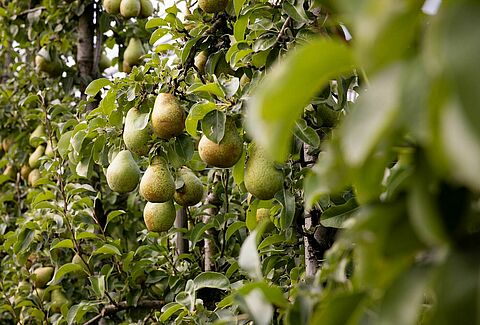
Pear brown spot occurs exclusively on pears, particularly in the Conference variety, which accounts for approximately 90% of the pear-growing area.
In 2012, an increase in infestation was observed in the field, with a severe outbreak in 2013. In the years that followed, the pressure gradually subsided again. But in recent years, the infestation has been on the rise again, with a significant increase in the past year.
According to Ferdy, no single clear cause can be identified: “There is simply a lack of fundamental knowledge. We know that the fungus can germinate multiple times and adapt to conditions. The puzzle is not yet complete, making it difficult to say exactly why infestation suddenly explodes in a particular plot.”
Factors such as soil EC, drought, root stress, UV radiation, and regional differences play a role. CAF also observes that in some years, scab spraying inadvertently suppresses part of the Stemphylium pressure, and thus contributes less in dry years.
Why pear brown spot is so difficult to control?
Stemphylium differs from scab in that it has a more aggressive infection mechanism. A spore can germinate 6 to 7 times, giving the fungus more opportunities to infect the crop. A single period of favoruable conditions is enough to start a chain of infections.
“You get stuck in a vicious cycle,” Ferdy explains. “That’s why treating symptoms during the season alone is often insufficient.”
Furthermore, CAF research shows that pear fruits are most susceptible especially in the first 70 days after flowering, but that a new susceptibility window opens again starting in August. This is essential knowledge for timing interventions.
The role of Trianum-P: infection reduction at the source
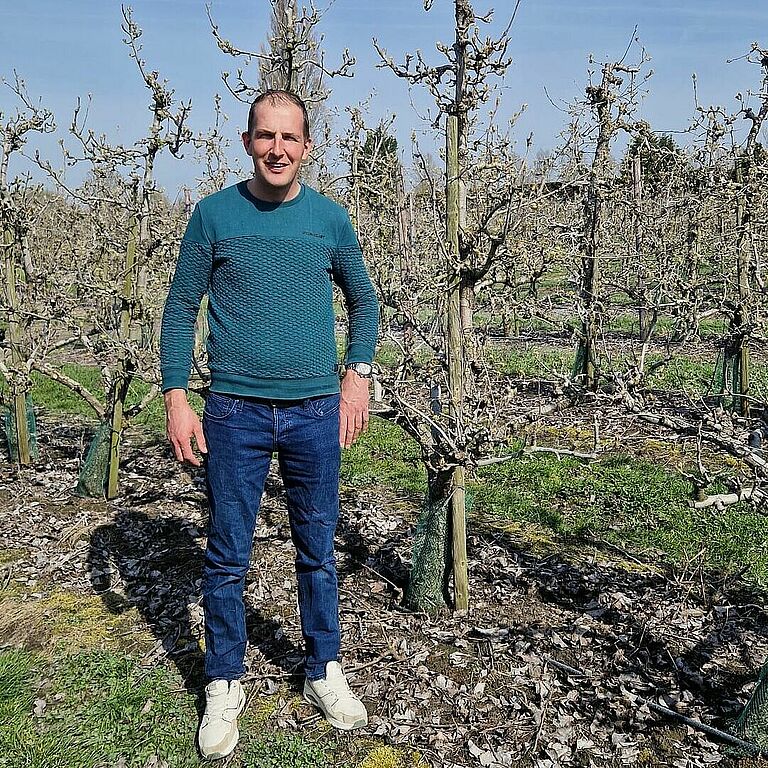
Ferdy Tolhoek, crop protection specialist at CAF
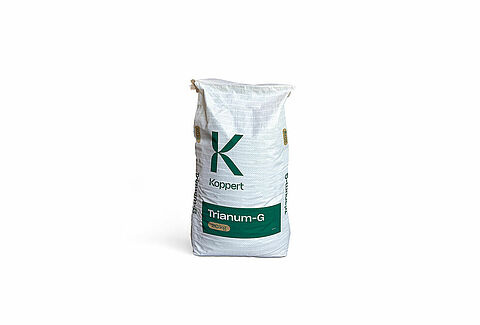
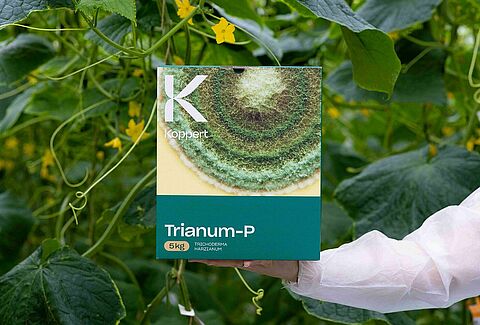
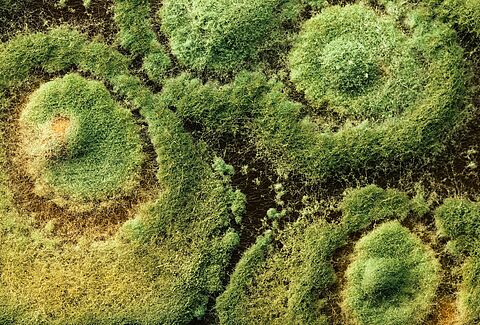
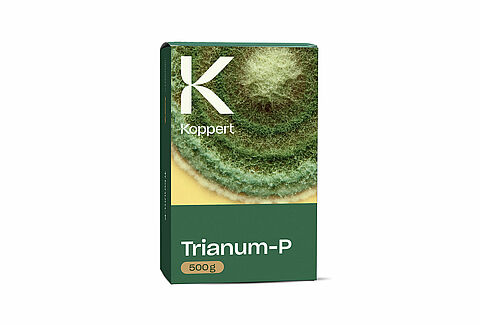
CAF has been working with Trianum-P, Koppert’s Trichoderma harzianum T-22 product, for over 10 years, which has held official label approval for pear brown spot for several years. Ferdy sees the value of Trianum-P primarily in the soil phase: “It’s about competition in the soil. By using Trianum-P, you reduce the pressure from the ground up. With lower pressure, you can achieve much more with the fungicide regimen. Our previous research has shown that with an intensive fungicide regimen, a maximum of 70% control can be achieved. The remaining portion must come from somewhere else, and that is where Trianum-P can contribute.”
In recent trials at CAF, Trianum-P achieved approximately 35% reduction in fruit damage under heavy infection pressure. According to Ferdy, this should not be viewed as insufficient, but rather as highly valuable: “Under such extreme pressure, 35% is truly significant. Without Trianum-P, it would have been much worse. Growers need to recognize that.” He also emphasizes that Trianum-P is primarily a building block to be used within an integrated system with a long-term vision: using it over multiple years yields better results than applying it only after problems arise. It is essential to invest in these problem plots, because key fungicides will be phased out in the coming years.
Trianum-P as the foundation of a systemic approach
The traditional approach in pear cultivation is still symptom control: reacting to what happened last year. But according to Ferdy, that no longer works for pear brown spot. “You need to move toward a systemic approach. You build a healthy crop, support the soil, and repeat the use of Trianum-P over several years. That provides stability, even if the fungus adapts or if treatments are phased out.”
CAF sees a clear role for Trianum-P as a standard practice for growers who:
-
have seen pear brown spot infestation in the last 3–4 years
-
are dealing with abiotic stresses, such as drought or root problems which increases the risk on pear brown spot
Mindset in the sector: from costs to long-term returns
Many growers still consider Trianum-P a relatively expensive application. Ferdy understands that, but sees this perception changing as soon as growers experience the added value in their own fields. “Growers have traditionally based their decisions on the previous year. If they face little pressure for a single season, some let their guard down again. But that way of thinking no longer fits reality or the shrinking range of available products.”
According to him, it will become clear in the coming years that products like Trianum-P will become indispensable. Not only because the range of chemical products is shrinking, for example, fludioxonil against Stemphillium is slated to be phased out, but also because chemicals alone are insufficient. “It will be a combination of healthy soil, low disease pressure from the ground up, and well-chosen fungicides on top of that. That is the future.”
What else does the sector need for wider adoption?
Ferdy outlines three steps:
-
Continue to demonstrate long-term results: CAF will continue to use Trianum-P in projects and trials to provide insight into long-term accumulation and pressure reduction.
-
Demos at commercial farms. “We’re conducting pilot trials with growers again this year. That’s where conviction is built: seeing is believing.”
-
Raising awareness. Growers need to understand that Trianum-P is not a quick fix, but a system component: “You’re investing in the future, not just in the current season.”
Finally, Ferdy has a clear message for growers who have seen pear brown spot in their fields in recent years but are not yet using Trianum-P. “Take an honest look at the past seasons: how much pressure was there, how vigorous was the crop, and what measures did you take?” He advises growers who observe recurring Stemphylium to make the shift to a broader system approach, with Trianum-P serving as a fixed foundation. According to Ferdy, it is precisely this approach that delivers long-term stability: “It allows you to better cope with both increasing pressure and the shrinking range of available products. It is an investment in a resilient cultivation system for the future.”
Finally, Ferdy has a clear message for growers who have seen black fruit rot in their fields in recent years but are not yet using Trianum-P. “Take an honest look at the past seasons: how much pressure was there, how vigorous was the crop, and what measures did you take?” He advises growers who observe recurring Stemphylium to make the shift to a broader system approach, with Trianum‑P serving as a fixed foundation. According to Ferdy, it is precisely this approach that delivers long-term stability: “It allows you to better cope with both increasing pressure and the shrinking range of available products. It is an investment in a resilient cultivation system for the future.”