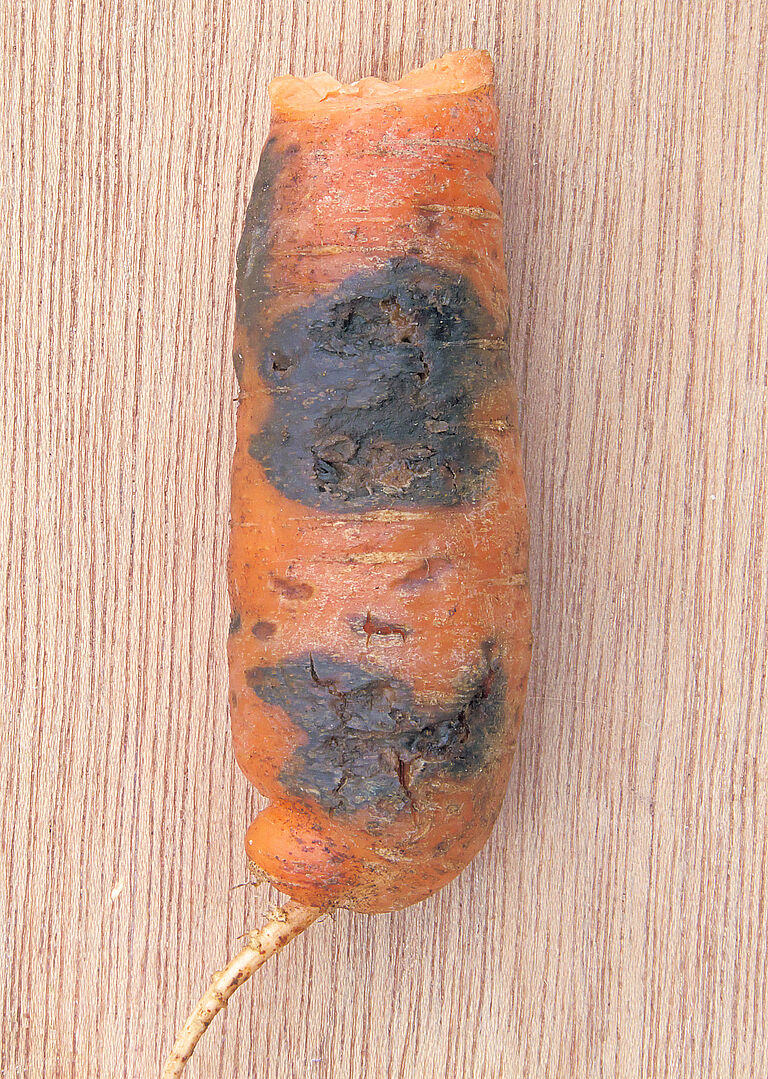
Life cycle and appearance of Black rot of carrots
Black rot of carrots (Alternaria radicina) is a seed-transferred carrot disease. The seeds are the main source of primary infection and this may lead to death of seedlings. From the primary infection of leaves, this type of carrot disease can spread to the flowers (especially dangerous in crops for seed production) and to the crown. Lesions of black rot of carrots (Alternaria radicina) may occasionally appear on the carrots at harvest but usually occur only during post-harvest storage.
Sporulation of Alternaria occurs at temperatures from 2-4 °C up to 28-30 °C (optimum temperatures lie between 15 and 28 °C) and at a relative humidity (RH) of over 90% or when the leaves are wet. Small differences in optimum temperatures occur between species, but in general, the risk of Alternaria infection is larger under quite warm and humid conditions. Infection may take place within a few hours, with lesions occurring as rapidly as two to three days later and sporulation within five days. Infection is both direct and through wounds and stomata. Spores are dispersed by wind and in some species through the splash of rain.