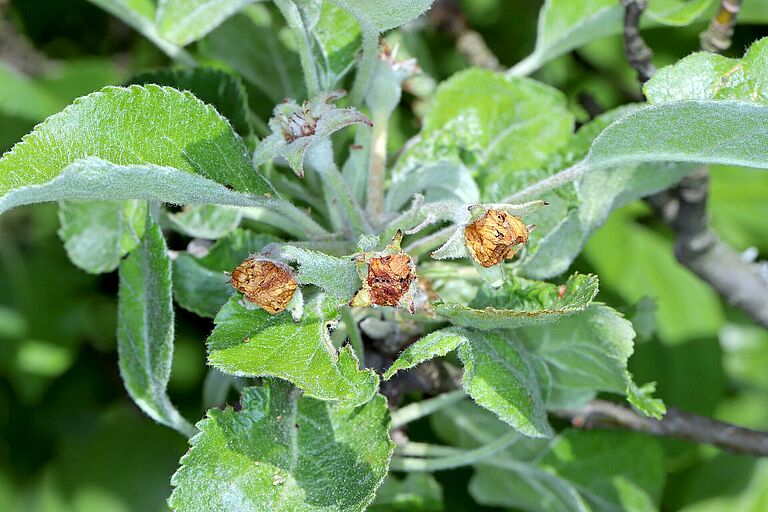
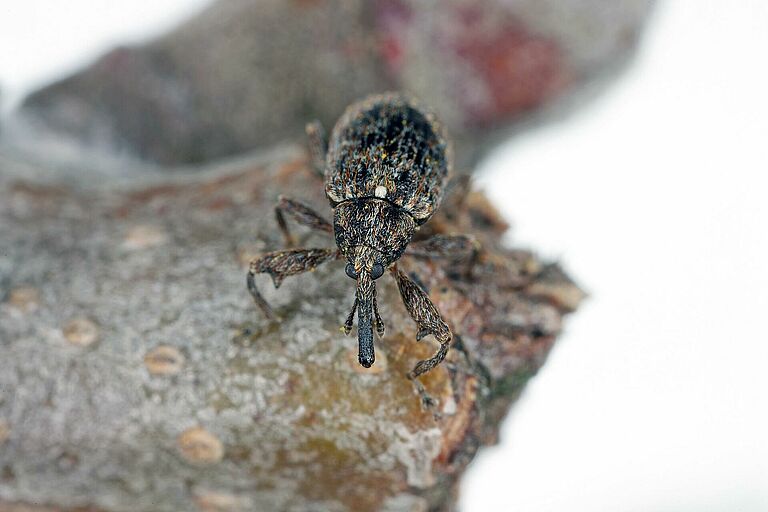
Damage symptoms of apple blossom weevil
Typical symptoms of apple blossom weevil damage include:
- Brown, unopened flower buds ("capped blossoms")
- Damaged flower clusters
- Reduced blossom numbers
- Poor fruit set
- Lower yield potential
The apple blossom weevil (Anthonomus pomorum) is an important early-season pest of apple orchards. Adult weevils emerge before flowering and feed on developing buds before laying eggs inside unopened flower buds. The larvae develop within the buds, preventing blossoms from opening and reducing fruit set. Heavy infestations can significantly impact yield, particularly in orchards with high pest pressure.
Typical symptoms of apple blossom weevil damage include:
Adult apple blossom weevils overwinter beneath loose bark, in leaf litter, hedgerows, and other sheltered locations around the orchard.
As temperatures increase in early spring, adults become active and feed on swelling buds. Females lay a single egg inside unopened flower buds before sealing the opening.
Larvae develop inside the flower buds, feeding on floral tissues and preventing the blossoms from opening. After pupation, new adults emerge in late spring or early summer and feed on foliage before seeking overwintering sites later in the season.
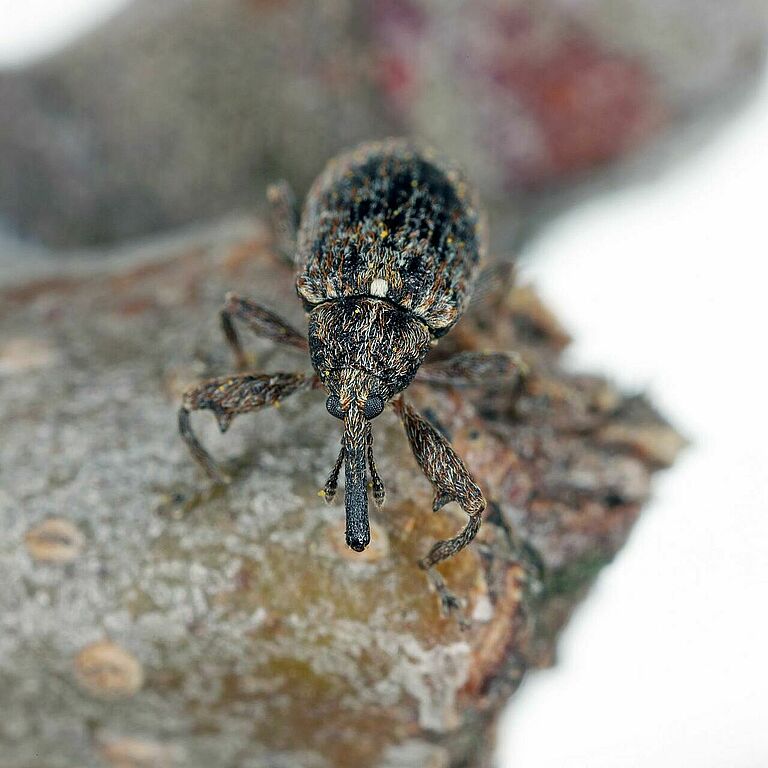
Regular monitoring before and during flowering is essential for early detection and timely interventions. Inspect orchards for:
Monitor temperature and bud development stage:
Monitoring adult activity helps determine pest pressure and supports timely management decisions.