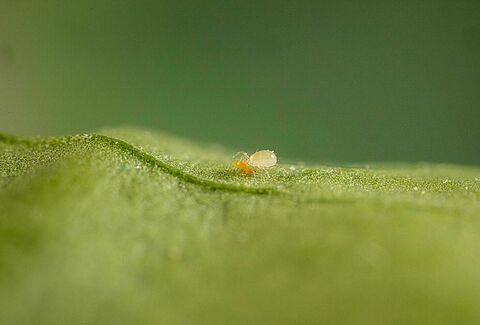
In the world of biological pest control, few predatory mites have garnered as much scientific interest as Amblydromalus limonicus. Native to subtropical regions and now studied globally, this phytoseiid mite has shown remarkable potential in managing a range of soft-bodied pests, particularly thrips and whitefly. While not yet widely accessible for all growers, its biological traits make it a standout candidate in integrated pest management (IPM) strategies.

Broad prey range with a unique edge
What sets A. limonicus apart is its ability to target multiple developmental stages of its prey. Unlike many predatory mites that primarily feed on early larval stages, A. limonicus is capable of preying on second instar (L2) thrips larvae, a stage typically more mobile and harder to suppress. This expanded predation window increases its effectiveness in reducing pest populations before they reach reproductive maturity.
In addition to thrips, A. limonicus also feeds on whitefly eggs and larvae, making it a versatile option in mixed pest scenarios. Its ability to adapt to different prey types without compromising predation efficiency is a key advantage in dynamic greenhouse environments.
High reproductive and predation rates
Another distinguishing feature of A. limonicus is its exceptional reproductive capacity. Under optimal conditions, it produces more offspring than many other commercially used predatory mites. This high fecundity translates into faster population build-up, which is crucial for establishing early control in pest outbreaks.
Moreover, A. limonicus exhibits one of the highest predation rates among phytoseiid mites. This means not only does it reproduce quickly, but each individual also consumes more prey, enhancing its overall impact on pest suppression.
A promising ally against invasive thrips
Preliminary observations suggest that Amblydromalus limonicus could be a valuable component in the biological control of invasive thrips species. Its assertive foraging behavior and adaptability indicate potential for contributing to pest suppression, particularly when used in combination with other beneficial organisms. While further validation is needed, its performance so far points to a promising role in integrated strategies targeting complex thrips infestations.
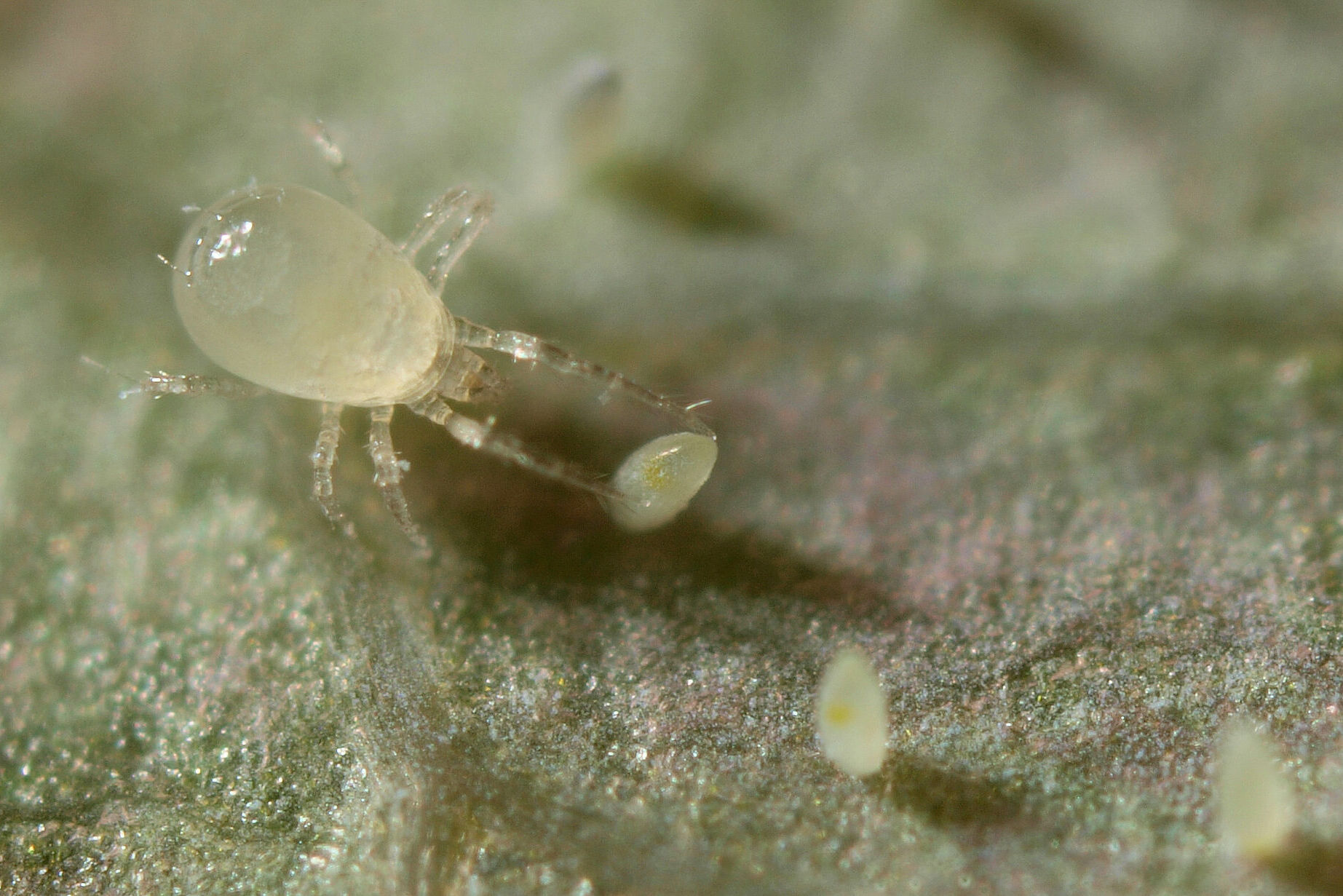
Performance at lower temperatures
Temperature tolerance is often a limiting factor in the use of biological control agents. Interestingly, A. limonicus performs well at relatively low temperatures compared to other tropical predatory mites. This makes it suitable for use in temperate climates or during cooler seasons, extending its utility beyond the typical warm-season window.
Conclusion: a promising but specialized ally
While Amblydromalus limonicus is not yet universally available or suitable for all cropping systems, its biological profile is undeniably impressive. From its ability to target later thrips instars to its high reproductive and predation rates, it represents the most powerful tool in the biological control arsenal among commercially available predatory mites. As research and production methods advance, these mite products become more accessible, offering growers a robust and adaptable solution for sustainable pest management.
The predatory mite Amblydromalus limonicus is available in a bottle (Limonica).