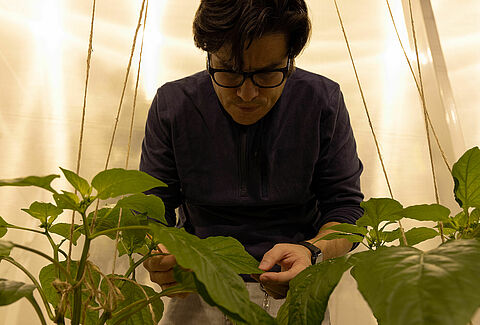
Controlling certain insect pests biologically can be incredibly challenging and requires the combination of multiple organisms with complementary actions. Therefore, developing an effective biological solution takes more than proving that an individual product works. It requires deep understanding how different organisms interact, testing them thoroughly under realistic conditions and connecting scientific expertise with growers’ needs. Koppert’s recent sweet pepper showcase puts this approach into practice.
Over decades of research and development, Koppert has built extensive knowledge about our beneficial insects, mites and microorganisms: how they work, under which conditions they perform best and how they can contribute to controlling pests and diseases.
In the sweet pepper showcase, Koppert brought this knowledge together. They combined insights from different biological solutions into a complementary strategy that provides protection of the sweet pepper plants for the whole duration of the cycle against the most important insect pests.
Designed around greenhouse reality
A showcase only becomes valuable if it reflects what growers experience daily. That is why the project was developed in close collaboration with Koppert’s Sales, and with Market Development teams.
After weekly monitoring of the pest situation in the greenhouse, technical consultants from Koppert Netherlands and the R&D team discussed the actions to take, much in the same way as they would advise growers. This way, they were helping the team to make decisions that reflect commercial greenhouse practice as closely as possible.
Market Development provided another important connection: the market itself. Their involvement helped ensure that the scenarios, challenges, and strategies reflected real-world grower concerns and answered questions relevant to their daily operations.
This collaboration contributed to the design and execution of the showcase by R&D. During the summer and autumn phase, the team showed how an early, preventive biological strategy could keep a small aphid population from developing into a serious infestation. Later, during winter and spring, the system was deliberately challenged with much higher pest pressure, leading to the scenario of an aphid outbreak.
This allowed the researchers to show not only whether the biological strategy worked under favorable circumstances, but how far it could be pushed when conditions became more difficult. Their involvement helped ensure that the scenarios, challenges, and strategies reflected real-world grower concerns and answered questions relevant to their daily operations.


Seeing biological control in action
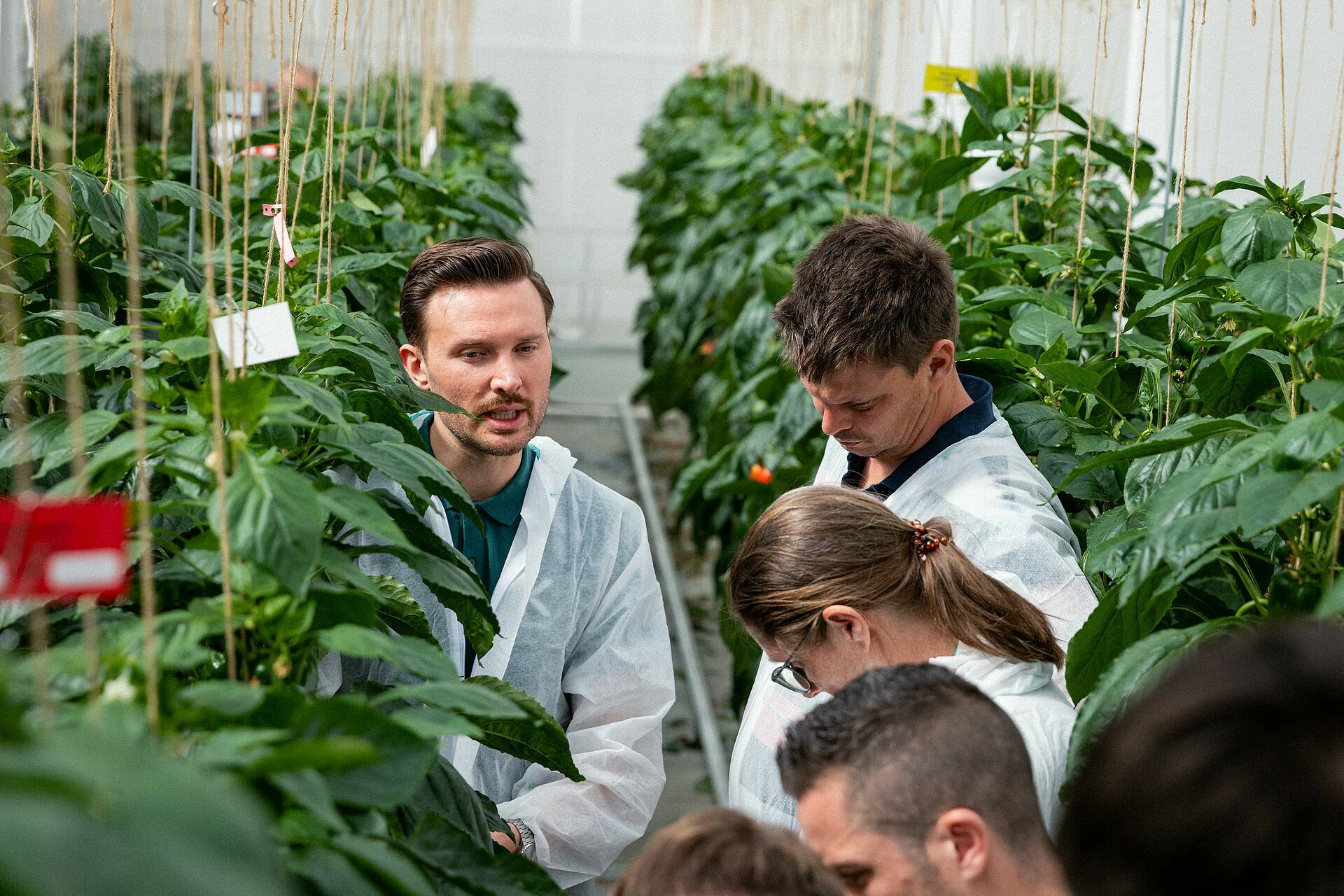
The greenhouse also became a meeting place between research and practice.Throughout the project, groups of Dutch growers and distributors were invited to visit the showcase. Instead of only presenting trial results, Koppert could show customers live what was happening in the crop and discuss the biological strategy while it was being implemented.
This interaction worked both ways. Customers got an opportunity to see what biological solutions can achieve, while their questions, experiences and practical challenges provided valuable input for further development.It is an approach that helps shorten the distance between generating knowledge and applying it.
Innovation through integration
The showcase reflects a broader development in biological crop protection. As biological knowledge continues to grow, innovation increasingly comes from understanding how different solutions, disciplines and expertises can be connected.
Research provides sound knowledge of biological solutions; consultancy brings experience from the greenhouse; Market Development connects development with current and future market needs; and growers and distributors bring the reality in which these strategies ultimately have to perform. Bringing those perspectives together helps turn biological potential into practical crop protection strategies.
The positive results of the sweet pepper showcases give the team confidence that this approach is heading in the right direction. Yet, perhaps their greatest value lies in demonstrating how biological innovation moves forward: by showing in an appealing manner for customers, learning from them, connecting expertise and continuously bringing what we learn closer to the grower.
About 100% Green Cultivation
This showcase was part of the 100% Green Cultivation (100% Groen Geteeld) project, which is an initiative by five producer organizations (Harvest House, Growers United, The Greenery, ZON, and Oxin Growers) within the FVO (Federation of fruiting vegetables) and the partners involved (Koppert, van Iperen, Rijk Zwaan, Let’s Grow (Hoogendoorn 360), and van der Knaap). Koppert is working within the pilot towards a single shared goal: the structural reduction of chemical crop protection and the acceleration of the transition to future-proof, fully green cultivation strategies for fruit and vegetable crops.