Skip to content
  • Jump to:
  • Damage
  • Life cycle
  • Management

What is San José scale?

San José scale (Comstockaspis perniciosa) is one of the most economically important scale insects affecting apple and pear orchards. Both nymphs and adult females feed by inserting their mouthparts into twigs, branches, leaves, and fruit, removing plant sap and weakening the tree. Heavy infestations can reduce tree vigor, lower fruit quality, and significantly decrease marketable yield.

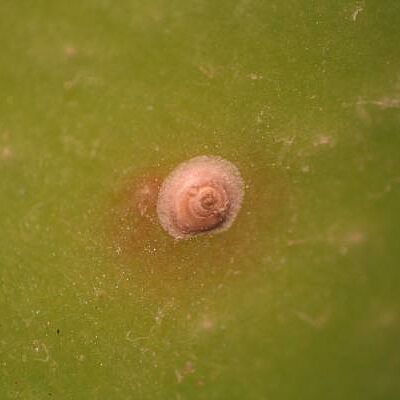
The insect is protected beneath a characteristic circular, grayish scale, making infestations difficult to detect during the early stages. Early monitoring and preventive management are therefore essential to prevent populations from building up.

  • Easy to use
  • Minimal resistance

Learn more about

Damage symptoms of San José scale

Typical symptoms of San José scale include:

  • Small, circular gray scales on twigs, branches, and fruit
  • Red or purple halos surrounding feeding sites on fruit
  • Yellowing or weakened foliage
  • Reduced shoot growth
  • Dieback of heavily infested branches
  • Reduced tree vigor
  • Lower fruit quality and marketable yield

Life cycle of San José scale

Overwintering

San José scale typically overwinters as immature nymphs beneath their protective waxy scales on twigs and branches.

Spring development

As temperatures rise in spring, nymphs resume feeding and develop into adults. After mating, females produce live young, known as crawlers.

Crawler stage

The crawler stage is the only mobile life stage and the most vulnerable to control. Crawlers disperse across the tree, settle on suitable plant tissue, and begin producing their protective wax covering.

Population growth

Several overlapping generations may develop during the growing season, depending on climate. Warm conditions favor rapid population growth and increased spread throughout the orchard.
Management of San José scale

Effective control of San José scale requires an integrated approach combining monitoring and biological support.

Monitoring San José scale

Regular monitoring is essential for early detection. Inspect orchards for:

  • Scale insects on twigs and branches
  • Red halos on developing fruit
  • Yellowing or weakened shoots
  • Crawler activity during the growing season
  • Increasing infestations on young wood

Biological control of San José scale

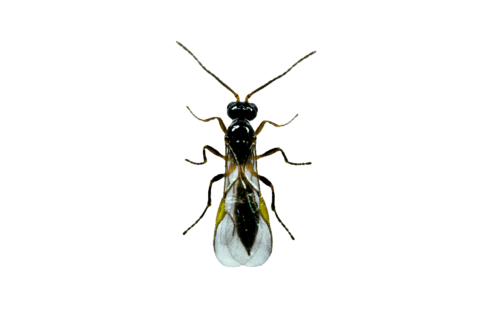
Biological control plays an important role in managing San José scale populations. Koppert supports biological control with Aphytis, a parasitic wasp (Aphytis melinus) that attacks scale insects by laying its eggs beneath the protective scale. Developing parasitoids kill the host while helping to suppress scale populations naturally.

Need help?