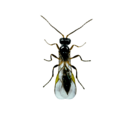
General Houseflies are a well-known pest of farm and home. Believed to have originated in central Asia, the insect expanded its range worldwide long ago as a commensal organism to human populations; t
General The species of Pulvinaria are similar in their appearance and damage symptoms. All of them have a wide host range and they are usually a problem in trees, shrubs and other woody plants. Damage
General Aspidiotus nerii , the oleander scale or white scale belongs to the Coccoidea and has an almost worldwide distribution. Host plants include olive, apple, mango, palms, oleander and citrus. Dam
General The velvetbean caterpillar Anticarsia gemmatalis is considered the main foliage feeding pests in the Americas and is one of the most common species affecting the soya bean crop. Its season of
General The Asian citrus psyllid, ( Diaphorina citri ), is an important pest of citrus in several countries as it is a vector of a serious citrus disease called greening disease or Huanglongbing. It i
General The box tree moth ( Cydalima perspectalis ) belongs to the family of Crambidae . It originates in the temperate and sub-tropical regions of East Asia (Japan, Korea, China). The box tree moth (
Overview May beetles are beetles from the Scarabaeidae family, and are plant-eating species from the Melolonthinae subfamily. Although this subfamily contains a number of species which cause damage to
General The macadamia nut borer ( Thaumatotibia batrachopa ) is native to Africa and was originally described from the Eastern Cape province in South Africa. Macadamia is the major host of this moth,
General The shallot aphid, Myzus ascalonicus , is extremely polyphagous. It feeds on crops such as onions, shallots, strawberries, lettuce, brassicas and potatoes and many ornamentals . The shallot ap
General The rose aphid, Macrosiphum rosae , is a serious and often abundant pest of roses. It is virtually cosmopolitan and widely spread in Europe. Damage symptoms Infestations with rose aphids retar