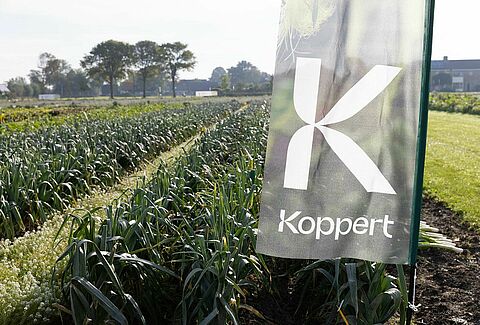
Growers are facing increasing pressure from pests such as thrips, aphids and spider mites, while the availability of conventional crop protection products continues to decline. During the Bejo Open Days in Warmenhuizen, The Netherlands, from Tuesday 22 September to Friday 25 September 2026, Koppert will demonstrate practical biological crop protection and pollination solutions that help growers meet these challenges sustainably and effectively.
Visitors are invited to explore several field demonstrations and learn how biological solutions can contribute to healthier crops, improved yields and more resilient growing systems. Visitors can register at the welcome desk on the day of the event. For more information, visit /www.bejo.com/open-days-2026.
Tackling thrips in leek, onions and cabbage
Thrips remain one of the most challenging pests in outdoor vegetable production, particularly during warm and dry summers. In crops such as leek, onion and cabbage, effective control has become increasingly difficult due to growing pest pressure and fewer available chemical options.
At the Bejo demonstration field, visitors can discover how the predatory bug Orius can be used as a natural and effective thrips predator. Combined with banker plants and flowering Lobularia, this approach supports the establishment of beneficial insects and contributes to sustainable thrips management throughout the season.

Reliable pollination for high-quality zucchini production
Successful pollination is essential for achieving uniform fruits, high yields and consistent crop quality. Bumblebees provide growers with a dependable pollination solution, working efficiently even under less favorable weather conditions.
In the zucchini demo field, visitors can see how Koppert’s bumblebee hives support natural pollination and contribute to improved fruit set and better crop performance. Their effectiveness and ease of use make bumblebees a valuable partner in commercial vegetable production.

Natural aphid control in lettuce
As aphid pressure continues to challenge lettuce growers, biological control is becoming an increasingly important component of integrated crop management strategies.
One of the most effective natural enemies of aphids is the lacewing larva (Chrysopa). These active predators feed on large numbers of aphids by piercing their prey and extracting body fluids. Because they remain active at relatively low temperatures and are particularly effective during the evening and night, they can provide valuable support throughout the growing season.
At the lettuce trial field, visitors can observe this biological control strategy and learn more about integrating lacewings into their crop protection programmes.
Managing spider mites in celeriac with Spical-Plus
Spider mites can rapidly develop into serious infestations, causing significant damage to vegetable crops, including celeriac. Their high reproductive capacity makes early and effective control essential.
At the Bejo Open Days, Koppert will present a practical trial using Spical-Plus, a predatory mite solution for spider mite control. The predatory mites develop within sachets and are gradually released into the crop over a period of several weeks, where they actively search for and consume spider mites.
Visitors can learn more about this preventive approach and see how biological control can help keep spider mite populations under control in practice.
Win one of our comfortable bean bags
Visiting our stand at Bejo Open Days? In addition to discovering our latest innovations and solutions, you'll also have the chance to win one of our comfortable bean bags.
Every visitor who stops by our stand can enter the prize draw. It's a great extra reason to come and meet our team, explore our solutions, and learn how we're helping growers create more sustainable and efficient operations.