Skip to content
  • Jump to:
  • Damage symptoms
  • Life cycle
  • Management

What is Asian soybean rust?

Asian soybean rust is a severe foliar disease of soybean caused by Phakopsora pachyrhizi. Symptoms are observed on the leaves, starting in the lower canopy, generally at or after flowering. Under epidemic conditions, the disease can cause major yield losses. Early detection is important because the pathogen can spread rapidly, particularly with dense canopies,when environmental conditions favour infection (cool, wet weather or high humidity).

  Biological solutions for Asian soybean rust  

Filters:
Clear all filters
Show all Show less
products found:

Questions or need help?

Contact us
  • Easy to use
  • Minimal resistance
  • No chemical residues
  • No pre-harvest intervals

Learn more about

Symptoms of Asian soybean rust

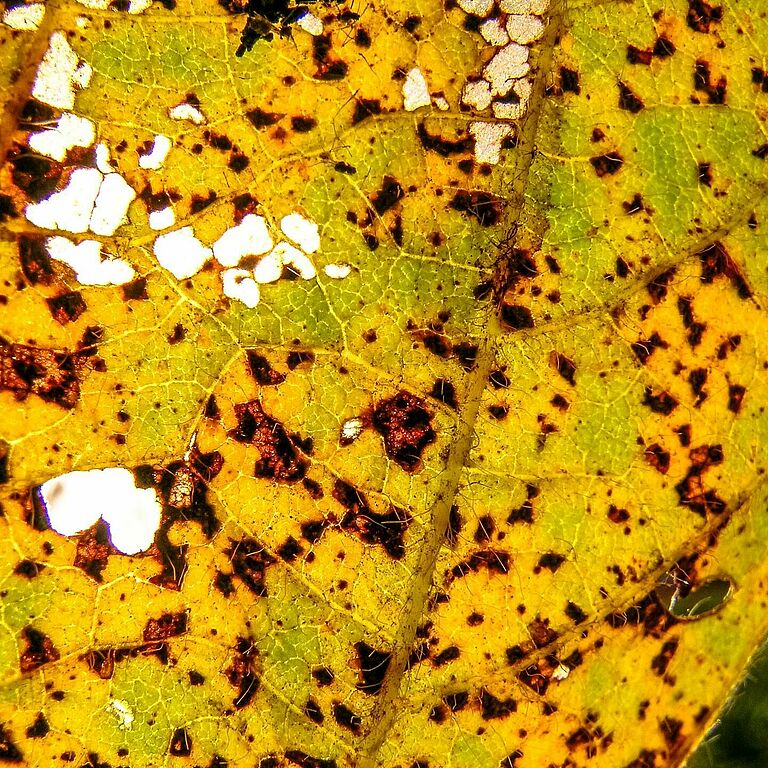
Typical symptoms of Asian soybean rust include:

  • Small brown or brick-red lesions, increasing in number as disease progresses
  • Powdery buff or pale-brown pustules
  • Pustules (uredinia) occurring particularly on the underside of leaves
  • Diseases progresses up the plant, with severely diseased plants becoming completely defoliated
  • Dark reddish-brown lesions later in the season
  • Occasionally symptoms on petioles, stems and cotyledons

Susceptible varieties typically develop tan colored lesions with abundant sporulation, while resistant varieties may develop smaller red-brown lesions with fewer pustules.

Life cycle of Asian soybean rust

Survival and inoculum

In regions where temperatures remain suitable, infected host plants can provide a continuing source of inoculum. Survival requires temperatures above approximately 4°C.

Spore dispersal

Phakopsora pachyrhizi produces urediniospores that can be transported over long distances by wind and air turbulence. Rain splash can also help dislodge spores.

Infection

Moist conditions are required for spores to germinate and form infection structures. Disease development is favoured by temperatures of approximately 16–28°C.

Disease development

Humid conditions and abundant summer rainfall favour outbreaks. Temperatures above 30°C or below 15°C inhibit disease development, while reduced light intensity can favour infection.

Management of Asian soybean rust 

Effective control of Asian soybean rust requires an integrated approach combining preventive measures, intensive monitoring and biological control.

Cultural practices

Reducing disease pressure and selecting appropriate varieties can support rust management.

  • Variety selection: Use soybean varieties with different resistance patterns where appropriate.
  • Crop rotation: Alternate soybean with other crops as part of the overall disease-management programme.
  • Planting date: Early Planting dates and early maturing cultivars can play a role in mitigating infections.

Monitoring Asian soybean rust

Early detection is particularly important because Asian soybean rust can spread rapidly.

Inspect crops for:

  • Small yellowish-brown or greyish-brown lesions
  • Reddish-brown spots
  • Pustules on the underside of leaves
  • Buff or pale-brown spore masses
  • Disease progression across the canopy

Combine crop scouting with weather monitoring. Risk increases during humid, rainy periods with temperatures around 17–27°C.

Biological control of Asian soybean rust

Macan is registered for biological control of Asian soybean rust caused by Phakopsora pachyrhizi. The product contains Bacillus velezensis CECT 8237, which colonises the leaf surface and helps restrict fungal development through competition and the production of metabolites that disrupt fungal cells and spore germination.

Need help?