Management of brown spot in soybean
Effective control of brown spot in soybean requires an integrated approach combining cultural practices, monitoring and biological control.
Cultural practices
Reducing the amount of infected crop residue, through tillage, can help lower the amount of Septoria glycines inoculum available for subsequent soybean crops.
- Crop rotation: Rotate soybean with non-host crops such as maize, small grains or alfalfa.
- Manage crop residues: Incorporate infected soybean residues into the soil to help reduce pathogen survival between crops.
Monitoring brown spot in soybean
Regular crop monitoring helps detect early symptoms and determine whether the disease is progressing through the canopy.
Inspect crops for:
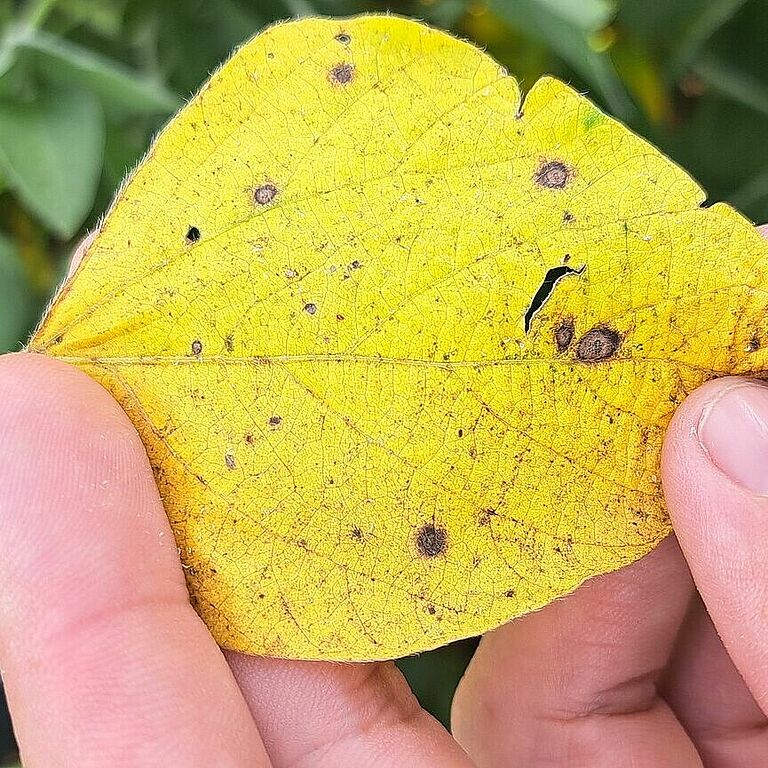
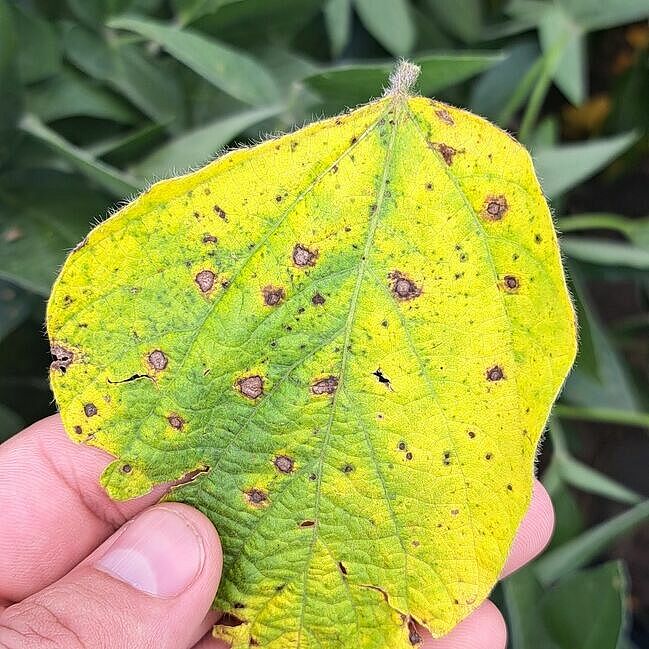
- Purple lesions on young leaves
- Small, irregular dark-brown leaf spots
- Yellowing of infected leaves
- Premature leaf drop
- Disease progression from the lower canopy upwards
Weather conditions play an important role in disease development. Pay particular attention during warm, wet periods, especially during grain fill.
Biological control of brown spot in soybean
Macan is a biological foliar fungicide that can be used to prevent and control brown spot caused by Septoria glycines. It contains the beneficial bacterium Bacillus velezensis CECT 8237. Following application, the bacteria colonise the leaf surface, compete with pathogens for space and nutrients, and produce metabolites that disrupt fungal development.
For brown spot, preventive applications or applications at the beginning of the first symptoms help integrate biological disease control into the soybean crop protection programme.