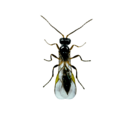
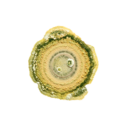
General The horse-chestnut leaf miner, Cameraria ohridella , probably originates from natural stands of the European horse-chestnut in Greece, Albania and Macedonia. It was first observed attacking or
General Stable flies belong to the genus Stomoxys , Latin for “sharp mouth”; a fitting moniker, as these flies are the only members of the Muscidae family that feed on mammalian blood (particularly ca
General The smaller green leafhopper or vine leafhopper, Empoasca vitis , is mainly a pest of grapevine but can also attack a variety of other fruit crops like for instance apple, cherry, plum and bla
General The cottony cushion scale, Icerya purchasi , is considered to have originated in Australia. It was accidentally introduced to California in about 1868 and devastated the citrus industry there
General The peach twig borer, Anarsia lineatella, is a pest of peach and also attacks apricots and almonds. It occurs in Europe, North Africa, North America, and Asia. Damage symptoms The tips of atta
General The European mole cricket, Gryllotalpa gryllotalpa is widely distributed in the warmer areas of Europe and introduced in the US. It lives mainly in the ground where it feeds on soil invertebra
General These three species of Diaspi s are very similar in their appearance and damage symptoms. Here, the Boisduval scale is described in more detail, as it is the most important one. The Boisduval
General The species of Pulvinaria are similar in their appearance and damage symptoms. All of them have a wide host range and they are usually a problem in trees, shrubs and other woody plants. Damage
General The walnut husk fly ( Rhagoletis completa) is of American origin. It occurs in Europe since the 1990s and is now established in several European countries where it a pest of walnut. Damage sym
General The hemispherical or helmet scale, Saissetia coffeae , occurs widely in tropical regions and in greenhouses throughout the world. It is a severe pest in coffee and citrus. Many ornamental crop