Skip to content
  • Jump to:
  • Damage symptoms
  • Life cycle
  • Management

What is tomato leaf mould (Fulvia fulva / Passalora fulva)?

Tomato leaf mould is a fungal disease caused by Fulvia fulva (synonyms: Passalora fulva, Cladosporium fulvum). The disease primarily affects greenhouse and tunnel-grown tomatoes, where high humidity and limited air circulation create favourable conditions for infection. The fungus mainly attacks leaves, reducing their photosynthetic capacity and weakening the plant. Severe infections can cause premature leaf death, reduced plant vigour and yield losses. Early detection and effective humidity management are essential to prevent the disease from spreading.

  • Easy to use
  • Minimal resistance
  • No chemical residues
  • No pre-harvest intervals

Learn more about

Symptoms of tomato leaf mould
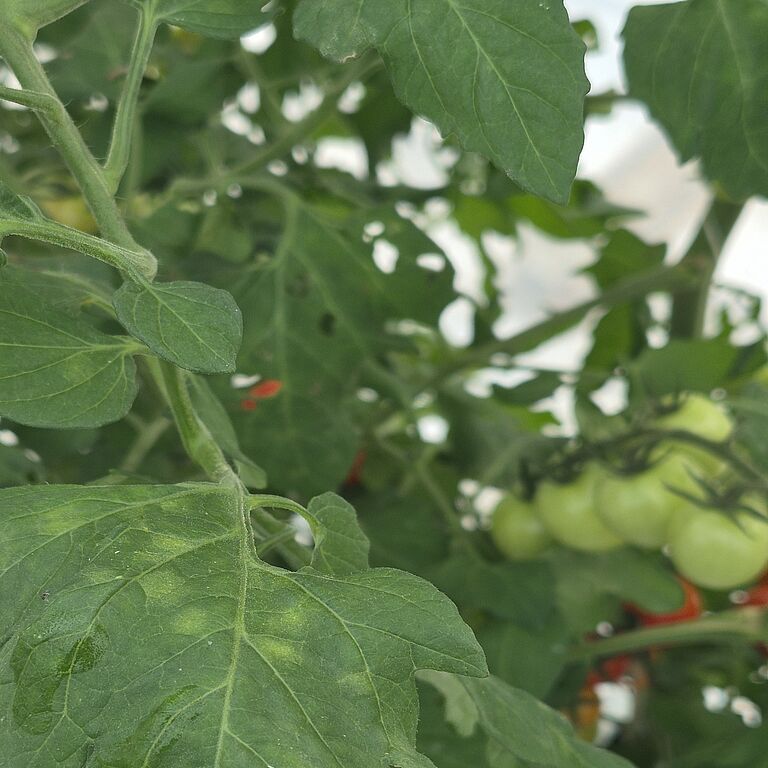
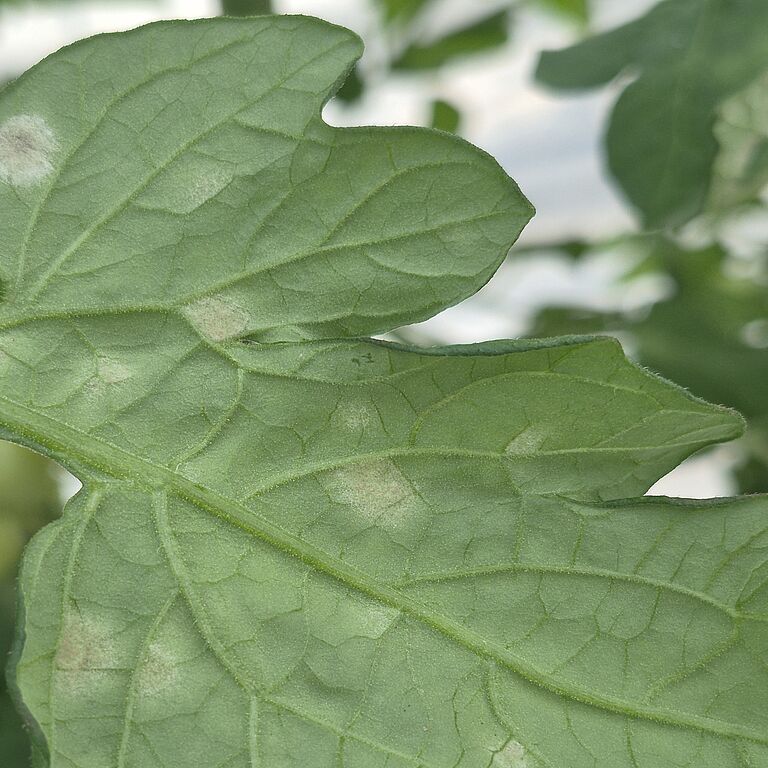
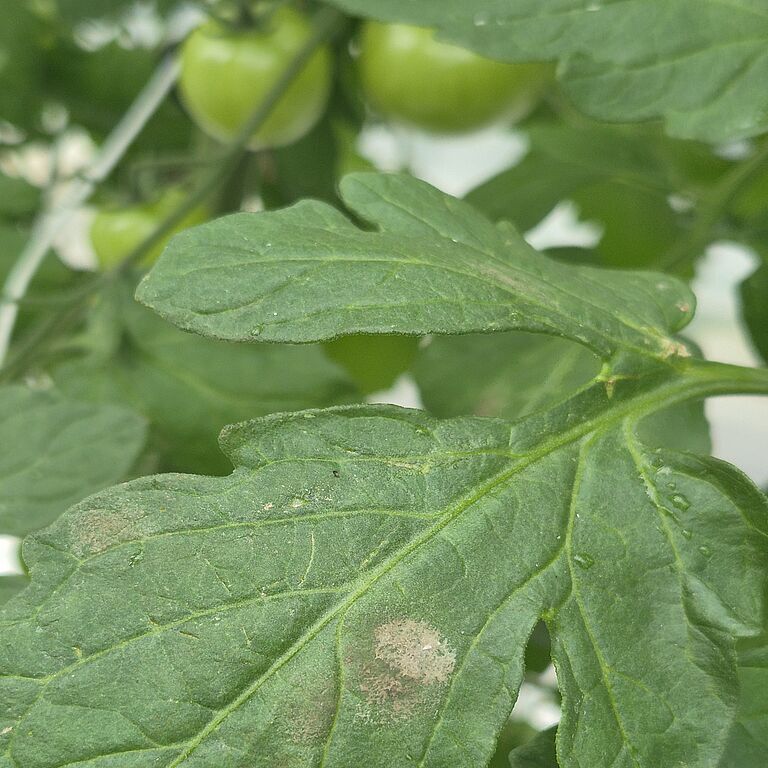
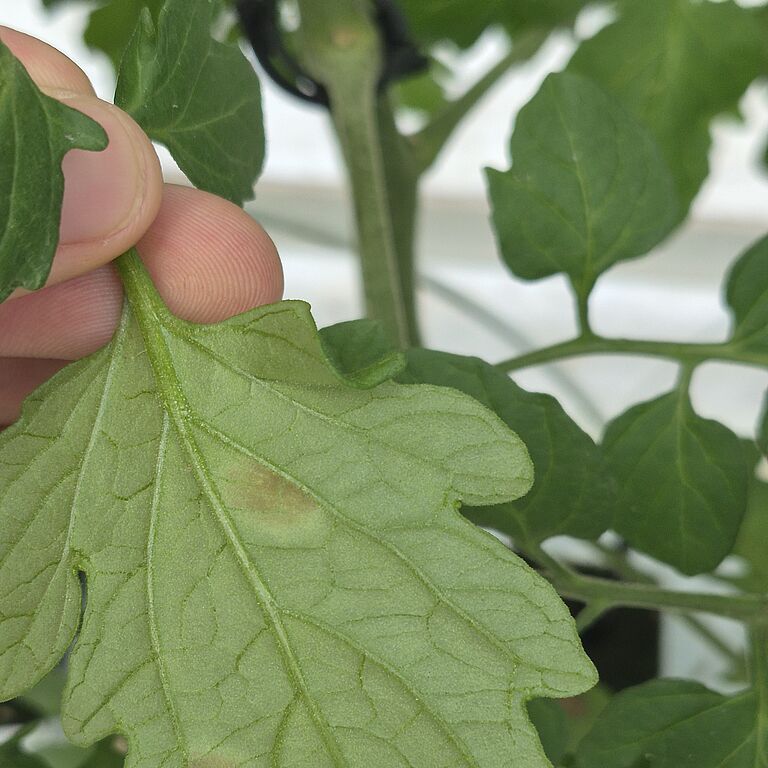
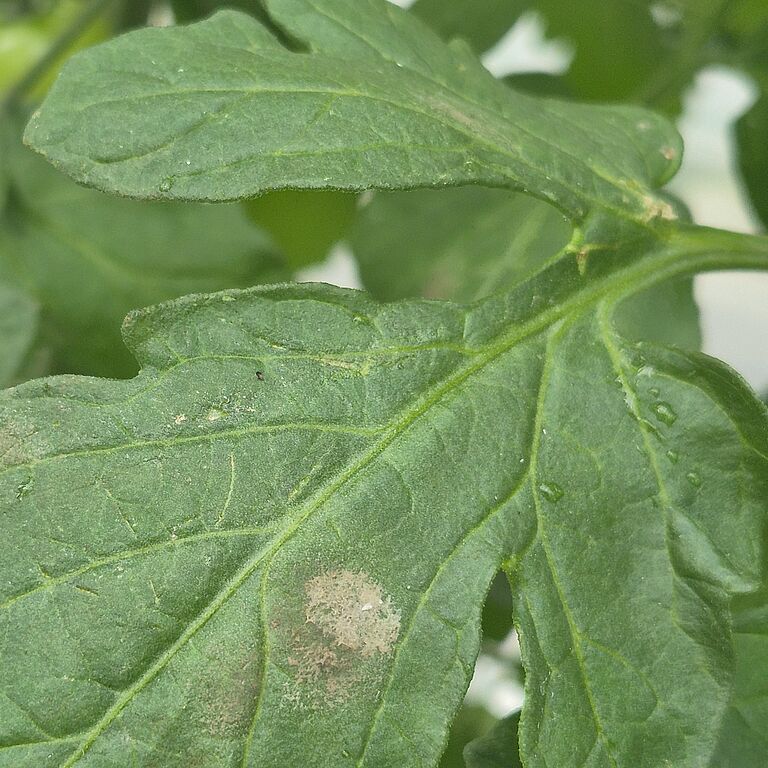
Tomato leaf mould (Fulvia fulva) typically develops on older, lower leaves before spreading upwards through the crop. The most characteristic symptoms are yellow patches on the upper leaf surface and velvety fungal growth underneath.

Common symptoms include:

  • Pale green or yellow spots on the upper leaf surface
  • Olive-green to greyish-brown, velvety fungal growth on the underside of affected leaves
  • Yellow patches that enlarge and merge as the disease progresses
  • Browning and drying of infected leaf tissue
  • Curling, withering and premature death of affected leaves
  • Reduced plant vigour and photosynthetic capacity
  • Reduced fruit production under severe disease pressure

Fruit infection is uncommon, but extensive foliage damage can indirectly affect fruit development and yield.

Life cycle of tomato leaf mould

Fulvia fulva can survive on infected crop residues and as fungal spores in the environment. The pathogen can also be introduced through contaminated planting material or seed. Spores spread through air movement, water splashes, contaminated equipment and crop handling. When they reach susceptible tomato leaves, they germinate and infect the plant, primarily through the stomata. Disease development is strongly favoured by high relative humidity, particularly above 85%, and moderate temperatures, often around 20–25°C. Under favourable conditions, the fungus produces new spores on infected leaves, allowing repeated infections throughout the growing season. Dense foliage, poor ventilation and prolonged periods of high humidity increase the risk of rapid disease development.

Management of tomato leaf mould

Effective management of tomato leaf mould relies on prevention, early detection and maintaining an unfavourable environment for fungal development.

Preventive measures

  • Control humidity: Maintain good greenhouse ventilation and avoid prolonged periods of relative humidity above 85%.
  • Improve air circulation: Use appropriate plant spacing, pruning and leaf removal to reduce humidity within the crop canopy.
  • Monitor regularly: Inspect lower leaves and leaf undersides for early signs of yellow spots and fungal growth.
  • Remove infected material: Carefully remove affected leaves and crop residues to reduce sources of infection.
  • Manage irrigation: Avoid unnecessary leaf wetness and excessive moisture accumulation.
  • Maintain crop hygiene: Clean tools, equipment and growing areas to limit pathogen spread.
  • Select resistant varieties: Use tomato varieties with suitable resistance to locally occurring races of Fulvia fulva, where available.

Biological control of tomato leaf mould

Biological disease management can complement preventive measures as part of an Integrated Pest Management (IPM) programme. Yazu is a preventive biological fungicide based on the lysate of Willaertia magna C2c Maky. It helps protect tomato plants against leaf mould (Fulvia fulva) through a dual mode of action:

  • Protective barrier: Bioactive compounds form a protective layer on plant surfaces, helping prevent fungal spores from germinating.
  • Activation of plant defences: Yazu stimulates the plant's natural defence mechanisms, helping inhibit pathogen growth and development.

Combining Yazu with humidity management, good ventilation, crop hygiene and regular disease monitoring helps protect healthy foliage and reduce tomato leaf mould pressure.

Need help?