Skip to content
  • Jump to:
  • Damage
  • Life cycle
  • Management

What is apple sawfly?

Apple sawfly (Hoplocampa testudinea) is an important early-season pest of apple orchards. Adult sawflies emerge during flowering and lay their eggs in apple blossoms. After hatching, the larvae feed inside developing fruitlets, causing characteristic feeding scars and premature fruit drop. Heavy infestations can significantly reduce fruit set, marketable yield, and fruit quality.

  Biological solutions for Apple sawfly  

Filters:
Clear all filters
Show all Show less
products found:

Questions or need help?

Contact us
  • Easy to use
  • Minimal resistance

Learn more about

Damage symptoms of apple sawfly

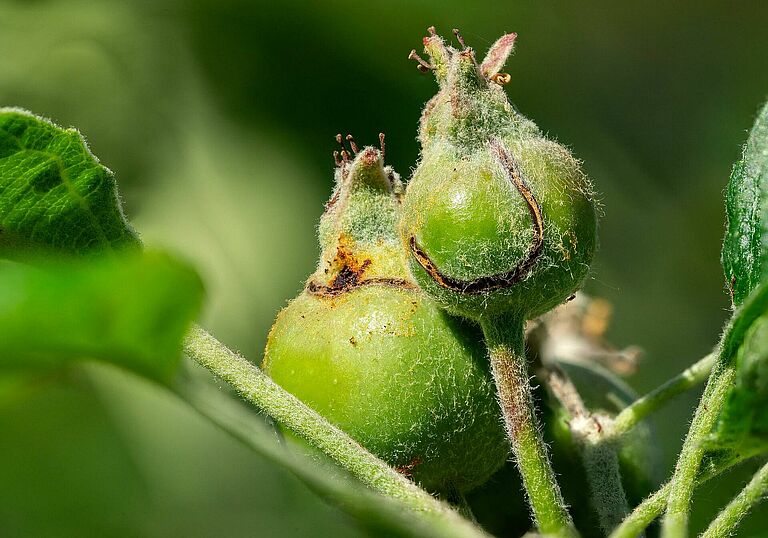
Typical symptoms of apple sawfly damage include:

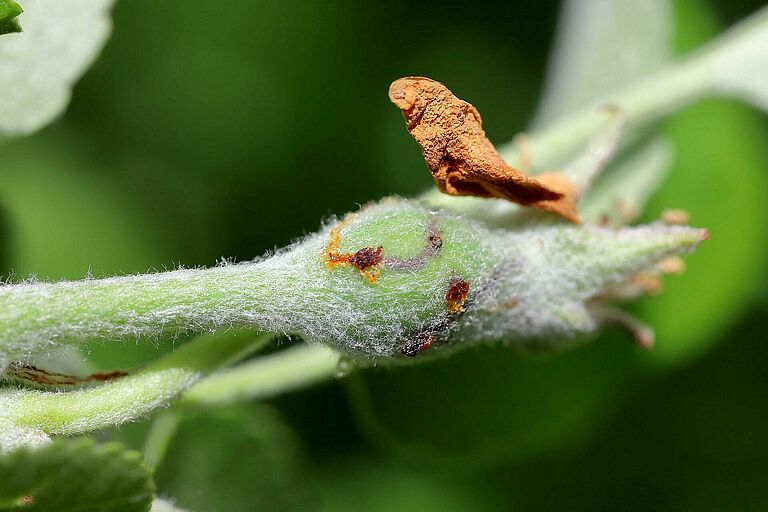
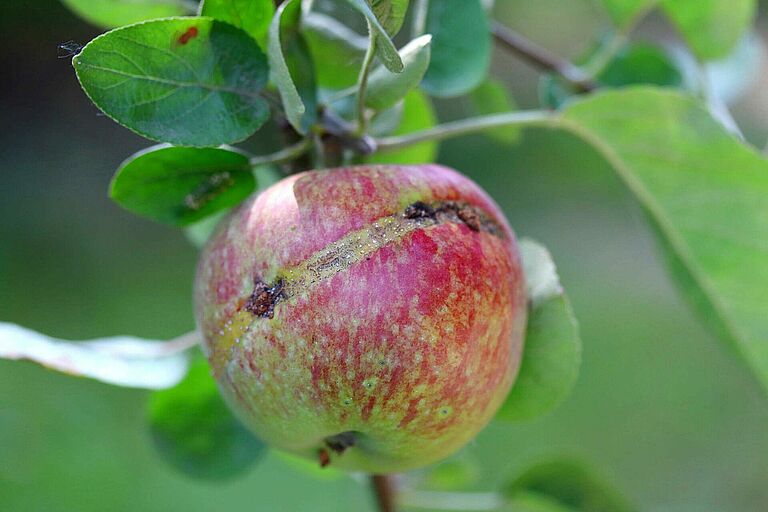
  • Crescent-shaped egg-laying scars on young fruit
  • Surface feeding scars on developing fruitlets
  • Tunnels inside fruit caused by larval feeding
  • Premature fruit drop
  • Frass around feeding sites
  • Reduced fruit quality and marketable yield

Life cycle of apple sawfly

Overwintering

Fully grown larvae leave damaged fruit and drop to the soil, where they form cocoons and remain until the following spring.

Spring development

The larvae pupate in spring. 3-4 weeks later adults emerge in spring, typically during apple blossom, and lay eggs individually in open flowers or flower buds.

Larval development

After hatching, larvae initially feed just beneath the fruit skin before tunnelling into developing fruit. A single larva may move between several fruitlets before completing its development.

Management of apple sawfly

Effective control of Apple sawfly requires an integrated approach combining monitoring and biological support.

Monitoring apple sawfly

  • Regular monitoring during flowering is essential for timely management. Inspect orchards for:
  • Adult sawflies during bloom
  • Egg-laying scars on young fruit
  • Surface feeding scars on fruitlets
  • Premature fruit drop
  • Larval feeding damage

Biological control of apple sawfly

Koppert supports the biological control of apple sawfly with Capirel, a beneficial nematode (Steinernema feltiae) that targets the soil-dwelling stage of the pest. Applied after larvae leave the fruit, the nematodes infect larvae in the soil, helping reduce the population that overwinters. In addition, mass trapping of the adults with Horiver Drystick is an effective tool to control apple sawfly populations.

As part of an Integrated Pest Management (IPM) program, beneficial nematodes contribute to long-term population suppression while reducing reliance on conventional insecticides.

Need help?