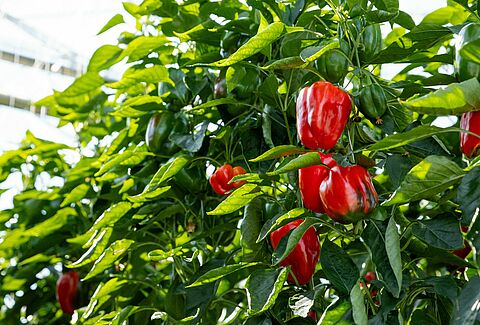
Dutch horticultural pilot 100% Green Cultivation tackles growers’ key pest challenges
Green peach aphids, invasive thrips species and harmful caterpillars: European greenhouse growers are facing a range of pests that they have not been able to control with effective, biological solutions yet. To face these problems head-on and structurally reduce pesticide use, the Dutch federation of fruiting vegetables (FVO) set up a project two years ago: 100% Green Cultivation. Koppert is a proud knowledge partner of this project and is making great progress in developing a biological system to tackle pests in protected sweet pepper cultivation.
Red flags
Growers, consultants and knowledge partners of the 100% Green project have marked a number of ‘red flags’. These are pests and diseases for which integrated pest management solutions are considered challenging. In past seasons of the project, Koppert, as a knowledge partner, has worked on several key challenges. Trials were conducted for hot spot spider mite control, new protocols were proposed for the control of invasive thrips species and many more.
“Drawing on our expertise in integrated production systems, biological pest control and plant resilience, we can provide growers with practical, scalable and effective solutions that can be implemented directly in the greenhouse”, says Knowledge Manager for Koppert Netherlands, Ben Driessen.
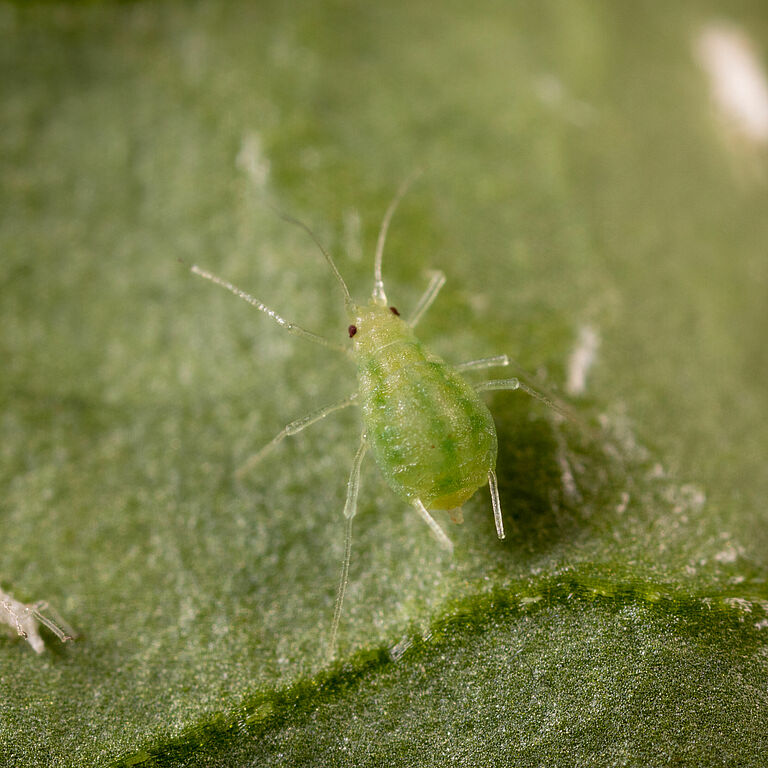
Another important ‘red flag’ is the control of the new strain of green peach aphid, Myzus persicae, in sweet pepper. The strain showed a reduced sensitivity to previously reliable solutions and exhibited a much faster development rate. Last year, the Sales Development, Marketing, and R&D departments of Koppert collaborated to demonstrate that this pest can be controlled solely with biological solutions.
The Myzus showcase
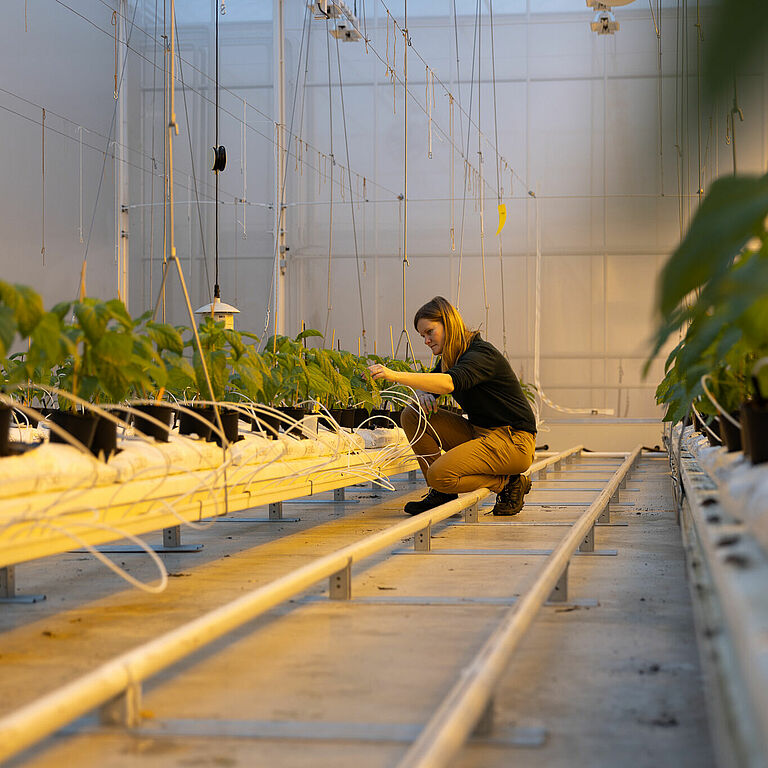
In November 2025, Koppert hosted a group of sweet pepper growers and distributors to show them the successful result of using 100% of the company’s biological solutions in an experimental greenhouse. The first ‘see-it-live’ R&D showcase to put science in action, simulated the summer and autumn seasons of the sweet pepper cycle.
Global team lead bio-insecticides macro, Francisco Gonzalez, explains:
“In a preventative approach we showed that our parasitic wasp Aphilin (Aphelinus abdominalis) in combination with Ervibank (banker plants) provided remarkable protection to prevent the development of Myzus colonies. Yet, in some cases, aphids that escaped control by Aphilin were suppressed by Aphipar-M (Aphidius matricariae).”
The results pinpointed that prevention was key to keeping the populations below the limit at any time.
But aphids aren't the only challenge in this crop. In this part of the crop cycle, caterpillars are also a threat to a healthy harvest. To control the caterpillars, the team incorporated Capsanem, one of Koppert’s beneficial nematodes, into the 100% biological Integrated Pest Management programme (IPM). To combat secondary pests, such as thrips and spider mites, our portfolio of predatory mites and insects was used. Koppert’s biofungicide Trianum was applied to boost overall plant health and resilience.
Next steps
To prove that biological solutions are the way to go throughout the entire season, the team is now simulating the winter and spring seasons of the crop cycle. Here, the strategy we implemented is more curative than preventative, due to the higher risk of aphid outbreaks early in the cycle. In addition to parasitic wasps (Aphipar, Aphilin), and predators (Aphidend) the bioinsecticide Mycotal is also part of the IPM programme. Despite the huge aphid outbreak that the team simulated, the Koppert biocontrol programme still managed to eradicate the pests. This is especially visible when looking at the plants in the control treatment, where there’s no intervention with Koppert solutions:
“While the plants in the neighbouring control-compartment are completely covered by aphids, and the plants are collapsing, the plants were Koppert 100% Green IPM was applied are recovering from the outbreak and the tops of the plants are pest free”, says Gonzalez. “The outbreak of aphids was huge, but each one of the products of the implemented IPM programme helped to control the pest.”
Transitioning to a green cultivation system
For Koppert, it is important to share the generated knowledge about the biological solutions with customers. The showcase is one way of doing this. It also gives the opportunity to interact with customers through an interactive session, answering their questions about the IPM programme created.
Because in practice, transitioning to a green cultivation will mean a different way of working: “It means moving from a reactive mindset to a more preventive and resilient crop protection strategy”, explains Gonzalez. “A preventive strategy based on biocontrol, gives growers more breathing room and peace of mind during the season because the system is designed to keep pest pressure under control before it becomes critical.”
The ambition to demonstrate to growers that Koppert can successfully develop 100% Green programmes does not stop here: the success of the first showcases provides confidence that it can be extended to many other crops and pests. Koppert believes that the future is not about relying on a single product, but on a well-designed program of high-quality biologicals that are well characterised and complementary to each other. Together, let’s move towards 100% sustainable agriculture, step by step.
About 100% Green
100% Green Cultivation (100% Groen Geteeld) is an initiative by five producer organisations (Harvest House, Growers United, The Greenery, ZON, and Oxin Growers) within the FVO (Federation of fruiting vegetables) and the partners involved (Koppert, van Iperen, Rijk Zwaan, Let’s Grow, and van der Knaap). Koppert is working within the pilot towards a single shared goal: the structural reduction of chemical crop protection and the acceleration of the transition to future-proof, fully green cultivation strategies for fruit and vegetable crops.